With all the new and updated ways of marketing your business in 2025, there is one old-school concept that will never go away.
The Humble Business Card.
A business card is a small card containing professional information about an individual or business. Typically printed on cardstock, business cards often contain a name, occupation or role, company name, and contact information.
While most are intended to offer a way to get in touch with the card giver, they often carry subversive campaign messaging, used as a marketing tool or be used as a form of artistic expression.
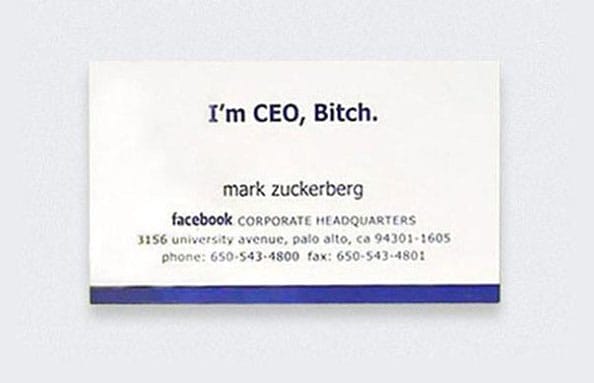
But where and when did business cards come into use as a way of networking and drumming up business?
The evolution of the business card
15th Century- Visiting Cards
The earliest known use of business cards, also known as visiting cards, is believed to be in 15th-century China, where they were used by aristocrats to introduce themselves and request meetings. These initial cards were simple, paper ‘Meishi’ – which means ‘Business Cards’ in Japanese, with calligraphy, serving as a form of personal identification and a way to announce an impending visit.
Meishi holds a cultural significance in Japanese business culture and there is a certain way that they are handled, given out and accepted. The process of handing out Meishi is a very formal one, with certain etiquette and rules that must be followed.
It is tradition to hand off and to receive meishi with both hands, to admire it and to not just dismissively put it in your pocket or bag. Most people in Japan own a meishi wallet just for meishi cards!
16th Century- Trade Cards
In the 1600s, King Louis XIV’s introduction of the “trade card” marked a pivotal moment in the evolution of business communication in Europe. This innovation was more than just a means of exchanging contact details, it was a multifunctional tool designed to bridge the gap between businesses and their customers.
Businesses would distribute trade cards in busy town squares and marketplaces, helping them to stand out and attract potential customers by providing essential location information alongside their promotional message. These trade cards were taken so seriously that a signed card would be considered a legally binding contract.
17th Century- Calling Cards
In the 17th century, calling cards were a common practice among the upper classes in Europe, particularly in France and England. These cards were used as a way to formally introduce oneself or communicate with someone, and they often served as a status symbol. They were typically handed to a butler or servant when making a visit, and they were also used to send messages or greetings.
The exchange of calling cards was governed by strict social etiquette. The quality of the card, the way it was presented, and even the color and style of the card could all convey important social messages.
Calling cards were often collected and displayed in homes, sometimes on special plates in the entrance hall. This collection served as a form of social networking, allowing individuals to see who had visited and to display their own social status.
18th & 19th century – The Industrial Revolution


As the industrial revolution got into full swing, the strict etiquette surrounding the distribution of business cards loosened up, making it easier for businesses to get their name out there.
Woodcut and letterpress printing was replaced by copperplate engraving. As the 19th century dawned, lithographic printing made it possible to produce rich detailed coloured designs.
Die-cut cards became popular in the 1890’s and wealthy businesses used high quality, unusually shaped cards. Folding cards, cards with moving parts, or even cards that revealed a secret message when held up to the light, were also employed to help stand out from the crowd.
20th Century Modern Business Cards:
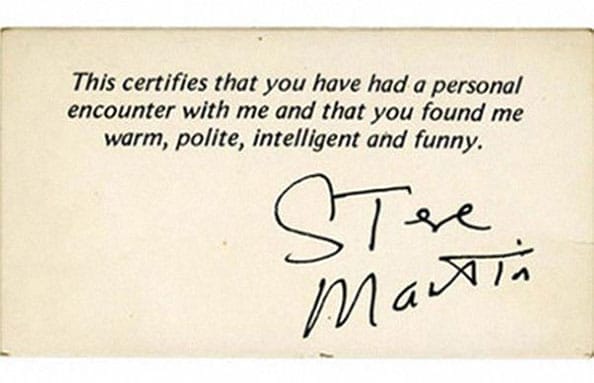
The Modern day calling card – Steve Martin – Actor.
While the concept of business cards evolved from these early forms, they continue to be a common way to exchange contact information and promote one’s profession or business.
In a world rife with virtual communication, a well-designed business card can make a lasting impression. Its physical presence provides a tactile experience, and the act of exchanging cards fosters a personal connection, like a handshake. It’s also quicker and easier than trying to take someone’s details down on a phone or sticky note!

The world’s most expensive business cards
Black Astrum’s $153K Diamond Cards
The world’s most expensive business cards are made by Black Astrum. Costing $153,000 per 100 cards, these cards are precision cast Hesa-Glas fabricated with a special glossy finish which is scratch and chemical resistant. The cards are produced in Switzerland, with each individual cart encrusted with 30 carat diamonds. Originally commissioned for a wealthy Middle Eastern family, the cards are now available to any wealthy individuals willing to purchase them.
Looking further ahead, future business cards could include:
- Augmented reality (AR): Cards that use AR to display interactive content such as videos or 3D models when viewed through a smartphone.
- Smart technology: Integration of biometric sensors or advanced chips for enhanced security and functionality.
- Real-Time updates: Digital cards that offer live updates and seamless integration with online platforms.
Although the exact future is uncertain, it’s clear that business cards will continue to evolve, offering new and innovative ways to connect and make a lasting impression.
Conclusion
The journey of business cards shows how innovation builds on tradition. As time passes, we keep finding new ways to make a lasting impression.
First impressions matter more than ever in the modern world of business, where information is always at our fingertips. An eye-catching business card can make a world of difference in making a good first impression on a potential customer or business contact.
Whether exchanged at conferences, meetings, or chance encounters, these little cards can seamlessly blend design with practicality. So, next time you hand out your business card, remember that you’re carrying on a tradition that spans centuries, linking you to a rich history of connections and opportunities.
Need to update your business card? Reach out to our team of professionals on sales@nobleink.com.au
Or Explore our free business card maker and create your own business card today.


